

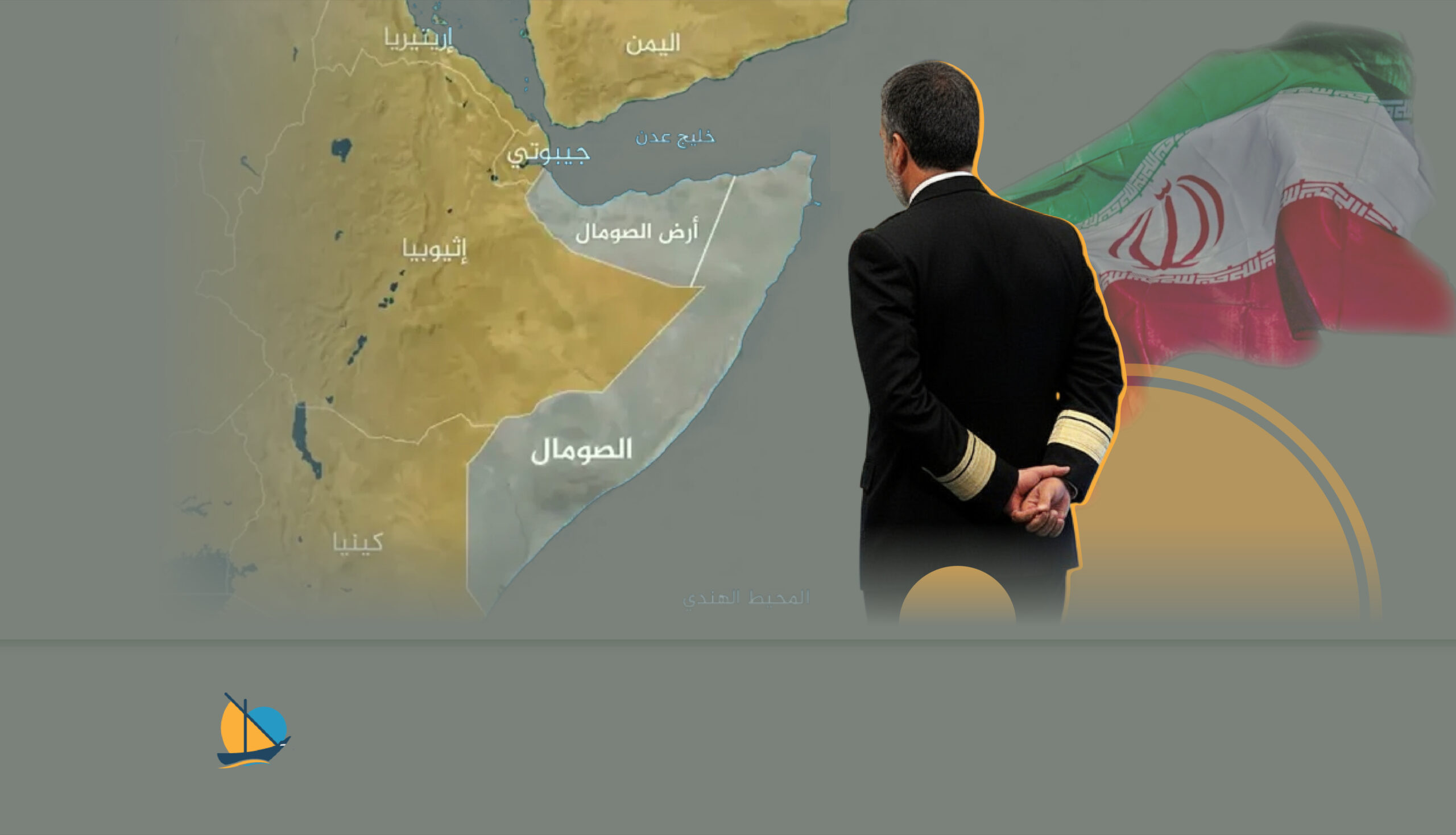
The Red Sea and the Gulf of Aden are undergoing rapid shifts in the balance of power. New regional roles are emerging that extend beyond declared economic partnerships toward a restructuring of the security landscape of the world’s most sensitive maritime corridors.
From southern Yemen to Somaliland, Emirati moves intersect with the expansion of Israel’s presence along trajectories that have alarmed regional actors, foremost among them Iran. Tehran increasingly views these developments as a direct threat to its national security and to the deterrence equation in the Red Sea.
In southern Yemen, where political forces seek independence and statehood, Abu Dhabi has consolidated its influence through sustained support for the Southern Transitional Council. This has enabled it to secure control over ports, islands, and strategic areas overlooking the Gulf of Aden. The south has shifted from an internal conflict arena into a regional battleground over maritime influence. In Somaliland, Emirati silence regarding Israel’s recognition of the territory, alongside extensive investments in the port of Berbera, has reinforced growing assessments that the area is moving toward a new maritime–security configuration near Bab al-Mandab.
These developments have not gone unanswered. Iran, which has accumulated influence along the Red Sea over the past decade, is reassessing its posture in light of what it perceives as an Israeli–Emirati attempt to reengineer the southern maritime space. While Tehran’s tools vary between calibrated containment in some arenas and harder pressure in others, the outcome is the same: the region is entering a phase of open competition over control of navigation and security in the Red Sea.
Somaliland and Southern Yemen
Available indicators suggest that Iran has recently redefined its geopolitical priorities in southern Arabia and the Horn of Africa. The Red Sea and the Gulf of Aden are now treated as components of Iran’s immediate national security, not as secondary theaters but as decisive fronts in the regional deterrence equation.
This shift does not stem from isolated internal Yemeni developments. It reflects an Iranian assessment that the region is undergoing strategic reengineering led by Israel, supported by regional partners, primarily the United Arab Emirates. The objective, from Tehran’s perspective, is to encircle Iran with a southern maritime belt, secure Israeli shipping lanes, and preempt any future threats from this front. Abu Dhabi, for its part, maintains that it is safeguarding its commercial and economic interests and denies hostile intentions behind the protection of its investments.
Iran’s posture toward Somaliland and southern Yemen appears to be part of a single, integrated strategy. The instruments differ according to the nature of each arena, but they serve a central objective: preventing the consolidation of a new and adverse geopolitical reality in the Red Sea.
Israel’s recognition of Somaliland constitutes an early warning signal in Iranian calculations. Tehran does not treat this move as a symbolic diplomatic gesture. It is seen as an indicator of Israel’s intent to shift from a limited maritime presence to a permanent intelligence and security foothold on the southern shore of the Red Sea. Such a foothold would enable monitoring of international shipping, leverage over Bab al-Mandab, and the completion of a maritime encirclement of Israel’s adversaries.
To date, there are no confirmed signs of direct Iranian field operations in Somaliland. However, the inclusion of the territory in Iran’s official warning discourse indicates its entry into an advanced security monitoring zone. Based on established Iranian behavior, Tehran is likely to adopt a preventive containment approach rather than direct confrontation. The objective would be to block the stabilization of an Israeli presence before it fully materializes.
If Israeli positioning advances, Iran is likely to pursue a low-visibility, soft-penetration strategy. This would rely on building social, economic, and religious networks, penetrating local elites, and avoiding overt military or political footprints. The aim would be to create future disruption capabilities that render any Israeli presence costly and unstable. In this sense, Iran views Somaliland as a theater for denial and neutralization rather than direct engagement.
Southern Yemen occupies a fundamentally different place in Iranian calculations. From Tehran’s perspective, it represents the forward defensive line of deterrence in the Red Sea. Any consolidation of a separate southern entity under Emirati or Israeli influence, or both, is perceived as an exceptionally dangerous strategic breach.
Sustained Emirati backing of the Southern Transitional Council and efforts to institutionalize southern secession are interpreted in Tehran not as an independent Emirati policy, but as part of a broader regional function serving an Israeli project. That project aims to fragment Yemen, control ports, islands, and energy assets along the Gulf of Aden, and transform the south into a maritime zone aligned with Israel.
Accordingly, Iran is expected to approach southern Yemen through a strategy of hard disruption rather than soft containment. This does not require direct control. It is sufficient to prevent stability, sustain security fluidity, and keep the south outside any cohesive governance arrangement that fails to account for Iranian interests.
Within this framework, Iran is likely to expand existing roles, particularly through Ansar Allah, and to exploit Yemen’s internal divisions as a strategic asset. The implied deterrence message is that any attempt to entrench a separatist reality in the south will incur high security and political costs.
Saudi Arabia and the Management of Conflict
Iran recognizes that Saudi Arabia remains the most sensitive actor regarding Yemen’s future. Riyadh views Yemen, both north and south, as its immediate security depth. On this basis, Tehran manages its moves to avoid pushing Saudi Arabia toward a comprehensive direct confrontation while keeping it locked in a strategic dilemma.
This dilemma arises from the clash of two trajectories. One is an Iranian path that Riyadh views as expansionist and risky. The other is an Emirati fragmentation path that Saudi Arabia regards as a long-term threat to its national security.
Iran calculates that this contradiction may eventually push Saudi Arabia, under pressure, to accept temporary tactical understandings, even if that entails consolidating the Houthis as a de facto reality. From Riyadh’s perspective, this may be less dangerous than losing the south to a rival axis, despite persistent mistrust toward Tehran. Iran does not build its strategy on Saudi trust, but on managing a delicate balance that prevents Riyadh from fully aligning with an adversarial project.
From an Iranian viewpoint, the division between the Presidential Leadership Council and the Southern Transitional Council constitutes a ready-made strategic asset requiring no additional investment. It blocks the formation of a unified Yemeni front, weakens prospects for stability, and leaves the Houthis as the most cohesive and organized actor. As a result, the current structure of the Yemeni conflict operates largely in Iran’s favor, even with limited direct intervention.
Iran’s positioning in Somaliland and southern Yemen should therefore be understood not as a situational reaction but as part of a long-term strategy aimed at preventing the Red Sea from being reshaped outside the deterrence framework Tehran has built over the past decade.
Iran acts softly where denial and containment suffice, and harshly where breaking a competing project becomes necessary. In both paths, it exploits regional contradictions and local divisions, maintaining a fragile equilibrium that denies its rivals the ability to lock in lasting strategic gains. Any failure to read this posture as a unified strategy, or any attempt to treat its arenas as separate files, would constitute a serious miscalculation with high and enduring regional costs.
Blocking a New Geopolitical Reality
In light of the above, Iran’s posture in the Red Sea and the Gulf of Aden is not driven by opportunistic expansion but by a systematic effort to prevent the emergence of a new geopolitical reality that it perceives as a direct threat to regional deterrence balances.
Tehran, closely monitoring the expansion of Israel’s presence, views southern secession and the transformation of the south into a functional maritime entity serving Israel as a danger that transcends its traditional rivalry with Saudi Arabia. It touches the core of regional security across the Arabian Peninsula.
From this perspective, Iran finds itself, objectively rather than alliance-based, aligned with the Saudi position opposing Yemen’s fragmentation and southern secession. Preserving a unified, or at least non-fragmentable, Yemen is seen in Tehran as a strategic barrier against the consolidation of a permanent Israeli presence on the southern shore of the Red Sea. Conversely, the Emirati project in the south is regarded as a destabilizing factor for all, particularly for Saudi Arabia, given its long-term implications for the peninsula’s security depth.
Accordingly, Iran operates within a precise equation. It seeks to block southern secession and neutralize its outcomes without sliding into full-scale confrontation. It aims to keep Saudi Arabia positioned as an objective partner in rejecting this trajectory, while continuing to exploit Yemeni divisions and regional contradictions to thwart any attempt to impose a stable separatist reality.
Should political efforts or tactical understandings fail to restrain this course, Tehran appears prepared to escalate pressure. This readiness is grounded in a firm conviction that reengineering the Red Sea will not proceed without cost, and that southern Yemen will remain a theater for breaking any regional project that ignores existing balances of power.