
Statements Are Not Enough: Is It Time for Saudi–Iranian Rapprochement to Stand on Its Own?

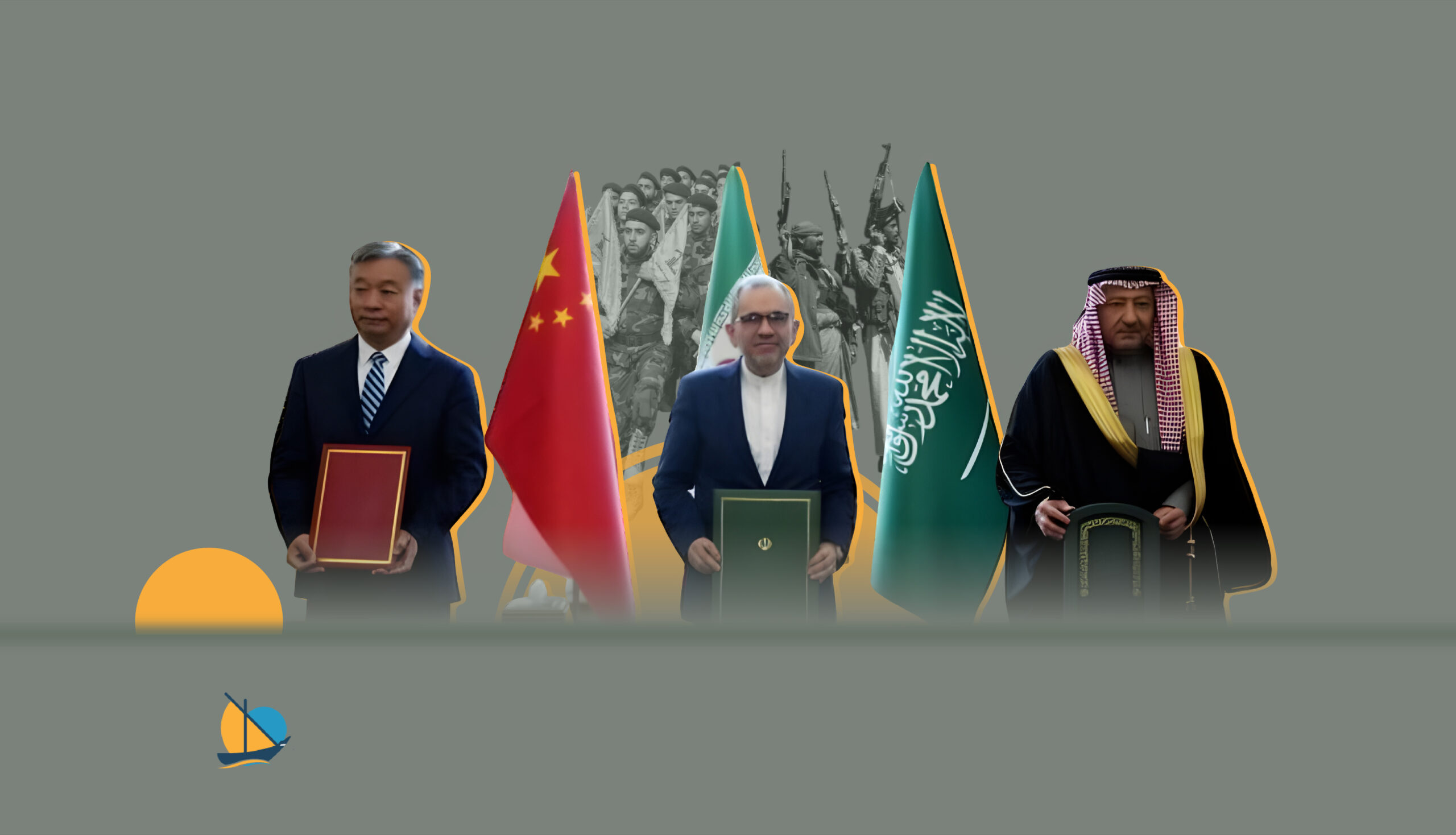
Following the trilateral meeting in Tehran in December 2025, the central question is no longer whether Saudi–Iranian rapprochement still exists. The more consequential issue is how this relationship can be insulated from regional volatility and from excessive reliance on an external mediator, namely China. The meeting, held in the Iranian capital with official Saudi participation and Chinese sponsorship, was not a routine diplomatic event. It was a test of the durability of the process launched in Beijing in 2023. The key question is whether this process has become self-sustaining, whether both parties demonstrate sufficient engagement and commitment, or whether it remains a fragile understanding dependent on the Chinese umbrella.
The decision to convene the meeting in Tehran, nearly three years after the Beijing Agreement, conveyed a clear political message. Riyadh and Tehran seek to consolidate reconciliation and prevent regional tensions from undermining it. The official Saudi presence on Iranian soil reflected a level of confidence that would have been unthinkable only a few years earlier. At the same time, Beijing aimed to reaffirm its role as a political sponsor of the process.
The strategic miscalculation lies in transforming Chinese mediation from a facilitating role into a permanent guarantor. China possesses economic leverage and political influence, but it lacks both the will and the capacity to manage Middle Eastern conflicts on behalf of regional actors. Chinese interests are pragmatic and subject to shifting priorities. Any long-term reliance on a “Chinese guarantee” is therefore insufficient and will not prevent Saudi–Iranian relations from facing renewed setbacks.
The final communiqué, which emphasized respect for sovereignty and non-interference, condemned Israeli attacks in Palestine, Lebanon, and Syria, and supported a political settlement in Yemen, projected an image of political convergence. In substance, however, it remains a broad political framework that falls short of binding and resilient arrangements capable of enduring without mediation. These shared positions must move beyond repetitive language in official statements and translate into enforceable policies and decisions on the ground.
Managed Stability, Not a Completed Partnership
Overall, the trajectory since the resumption of diplomatic relations in 2023 has not been negative. Embassies have reopened, ambassadors have been appointed, a trilateral committee has been established, and senior officials have exchanged brief visits. These steps contributed to de-escalation in indirect arenas of confrontation, particularly in Yemen, alongside a more regulated competition in Iraq, Syria, and Lebanon. They also facilitated notable progress in the management of pilgrimage affairs and cultural exchanges.
This stability, however, remains cautious and carefully managed rather than strategic. Major contentious files have not been resolved but merely frozen. Regional developments in 2025, including the Iranian–Israeli military confrontation, demonstrated that reconciliation remains vulnerable. Saudi Arabia’s deliberate avoidance of escalation helped prevent a collapse of the relationship, but it did not eliminate its structural fragility.
For an economically and politically strained Iran, relations with Saudi Arabia are no longer a diplomatic luxury. Amid Tehran’s strained ties with Washington, Riyadh represents a credible and influential channel capable of easing tensions and opening reliable lines of communication with President Donald Trump. In Lebanon, no sustainable settlement can materialize without Saudi approval, which Iran needs to alleviate pressure on Hezbollah and prevent further destabilization. Economically, rapprochement with Saudi Arabia offers tangible opportunities. Put simply, Saudi Arabia constitutes a major gateway through which Iran can attempt to break out of regional and international isolation.
What Does Riyadh Expect?
Saudi Arabia does not view reconciliation as a symbolic end in itself. It considers it a security and political instrument and a means to shape outcomes and consolidate influence across multiple arenas. Consequently, Riyadh expects practical and measurable steps from Tehran rather than rhetorical gestures. This expectation is reinforced by the governing style of Crown Prince and Prime Minister Mohammed bin Salman, whose approach prioritizes concrete results.
First, Saudi Arabia seeks a genuine shift from security competition toward cooperation in Gulf security. This would require non-aggression understandings, early-warning mechanisms, and transparent intelligence coordination.
Second, Riyadh expects a credible settlement in Yemen that curtails Houthi threats rather than a temporary tactical de-escalation. This includes Houthi acceptance of integration into a legitimate political framework at a time when southern Yemen faces profound instability.
Third, Saudi Arabia requires restraint in Iran’s regional conduct. This includes respect for Gulf sovereignty, an end to the use of proxies and sectarian constituencies in Saudi Arabia, Bahrain, and Kuwait as pressure tools, and serious engagement with long-standing disputes, including the gas field dispute with Kuwait.
Absent these steps, Saudi confidence will remain conditional and limited, regardless of improvements in political rhetoric.
The Core Equation: Interests Matter More Than Mediators
Iran may wager on its relationship with Saudi Arabia to mitigate regional and international pressure, but it has yet to secure substantial gains. Saudi Arabia, for its part, continues to await tangible Iranian concessions in Yemen and other files. Meanwhile, Israeli influence in the region continues to expand, a development neither side favors.
The sustainability of Saudi–Iranian reconciliation cannot rest solely on Chinese mediation. Its durability depends on the interlinking of interests. Political alignment, economic engagement, and solid security arrangements are essential, alongside political mechanisms capable of preventing a return to zero-sum dynamics.
Iran stands to gain by breaking isolation, expanding its strategic room for maneuver, and easing pressure on its allies, particularly in Lebanon. Saudi Arabia stands to benefit by neutralizing a strategic threat and achieving a regional balance that curbs Israel’s expanding influence while allowing Riyadh to focus on its development agenda. This convergence of interests constitutes the real guarantee and the true test of intentions.
If both parties succeed in translating this convergence into a robust partnership of interests, China’s role will naturally shift from guarantor to observer. This is the appropriate position for any external power in a mature regional order and one that would likely be welcomed in Washington. If reconciliation remains dependent on mediation, however, it will remain vulnerable to disruption.
The ultimate test of the viability and longevity of Saudi–Iranian relations lies in the willingness of both states to build a relationship that stands on its own, without an external crutch. That stage has not yet been reached.