
GCC at a Crossroads: Between the Reality of the Moment and the Burden of Deferred Questions

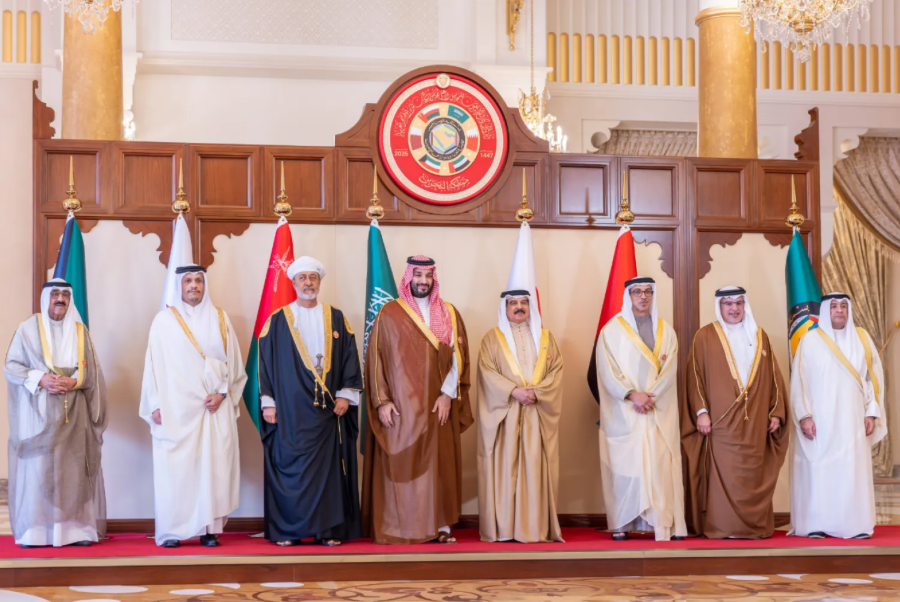
The Manama summit of 3 December 2025 felt less like a routine entry in the GCC’s long series of annual meetings and more like a forced return to unresolved questions that had been deferred for too long. Gulf leaders met in Bahrain amid a complex regional and international landscape: a devastating war in Gaza, a direct Israeli–American–Iranian confrontation, an Israeli military strike on Doha, rising pressure on the region’s security architecture, sharp volatility in energy markets, and, above all, a political environment far less stable than it appeared two decades ago — both regionally and within the GCC itself.
The final communiqué, as in many previous summits, was generous in tone. It reaffirmed the notion of “a common destiny”, reiterated commitments to collective security, and once again promised progress on the customs union, the Gulf railway project, and a unified air defence system. A closer reading of the document, however, reveals that the Council continues to operate in a grey zone between a stated ambition to revive the Gulf integration project and an institutional reality too fragile to translate that ambition into concrete policy. Many of the issues revisited in Manama are not new; they are long-delayed initiatives that have lived on the margins of summit documents rather than in the daily lives of Gulf citizens.
Yet the Manama summit did reorder priorities in a noticeable way. It acknowledged — explicitly this time — the persistent failure to complete the customs union and the need for binding timelines. It revived the Gulf rail project as a structural, cross-border initiative. It emphasized the urgency of advancing the joint air defence system, framing it as a requirement that can no longer be postponed by political caution or intra-GCC differences. The summit also reaffirmed a collective Gulf position on the Palestinian question at a moment when the credibility of any Arab or Islamic stance is being tested by the unfolding realities in Gaza and the broader occupied Palestinian territory.
A single summit, however, cannot be assessed without situating it within the trajectory of recent years. Since the Al-Ula summit in early 2021, which formally ended the rift with Qatar, the GCC has regained its institutional structure but not fully its political vitality. The broader geopolitical landscape has shifted dramatically. Saudi Arabia is redefining itself as a central regional power through an ambitious economic transformation project. The United Arab Emirates is moving confidently within its own economic and diplomatic orbit. Qatar has solidified its role as a sought-after mediator in crises from Afghanistan to Gaza. Kuwait and Oman have maintained their traditional posture as actors that favour hedging and mediation. Bahrain operates within a narrow corridor between Saudi influence and Emirati activism. This new configuration has positioned the GCC as one factor among several in the decision-making calculus of each member state — still necessary, but no longer the primary centre of gravity.
Despite these challenges, the Council’s broader record cannot be reduced to a narrative of stagnation. Over more than four decades, the GCC has accumulated a notable set of integration achievements. It played a critical role in preventing Kuwait from being absorbed by Saddam Hussein’s Iraq. It launched a preliminary customs union in 2003. It created a common Gulf market that, even if unevenly, facilitated freer movement of goods, capital, and labour. It established an interconnected power grid that reduced outage costs and strengthened electricity exchange. It oversaw hundreds of technical meetings that harmonised standards and regulations across education, health, environment, transport, and trade. It pushed member states toward treating GCC nationals almost equally in employment, property ownership, and investment. In this sense — and compared with other regional institutions in the Arab world — the GCC remains the most successful experiment in integration, even if its success is incomplete.
The other side of the ledger reveals a complex web of chronic structural weaknesses. The customs union is a telling example. More than twenty years separate its initial launch from today’s repeated promises of completion, while core issues — such as the distribution of customs revenues — remain stuck between committees and ministries. The common Gulf market has not evolved into a full economic union. The mobility of services remains restricted in key sectors. Fiscal and tax policies continue to diverge. The common currency project has been frozen since the UAE’s withdrawal from the monetary union in 2009, with no serious effort to revive it.
Beyond economics, major regional crises have exposed the limits of the Council’s collective action. The war in Yemen highlighted divergent Gulf approaches rather than unified decision-making. Saudi Arabia and the UAE led a direct military intervention marked by strategic and operational disagreements. Oman served as a mediator. Kuwait and Qatar focused on humanitarian and political channels. The intra-Gulf crisis with Qatar unfolded entirely outside GCC structures. No formal dispute-resolution mechanism was activated. The conflict required Kuwaiti mediation and direct American intervention before being resolved at Al-Ula.
The Covid-19 pandemic followed a similar pattern. Member states responded largely through national measures rather than a joint health framework. The crisis ended without leaving behind a unified Gulf health institution or a regional emergency fund.
At the heart of these limitations lies a foundational institutional problem: the GCC still operates on the basis of strict consensus. A single member’s objection can halt any initiative. A single reservation can delay agreements for years. The Secretariat General lacks executive authority and functions primarily as a coordinating body. The advisory body to the Supreme Council has no meaningful leverage. Dispute-resolution mechanisms exist on paper but are largely dormant, displaced by direct political intervention at the leadership level or by external pressure.
Power dynamics within the Council add another layer of complexity. Saudi Arabia, by virtue of its geographic, demographic, and economic weight, is the natural centre of the system. Smaller states have accepted this reality, yet each also seeks to prevent leadership from sliding into dominance. The UAE’s withdrawal from the common currency project was an early expression of this concern. The relationships some states maintain with regional powers — Oman with Iran, Qatar with Turkey during the height of the Gulf crisis — reflect, in part, attempts to balance Saudi influence. Today, muted rivalries between Riyadh and Abu Dhabi, Abu Dhabi and Doha, and Doha and Manama deepen these internal fissures. A cohesive GCC will be difficult to sustain if competition among member states becomes open rivalry over influence, markets, and political symbolism.
Against this backdrop, the Manama summit underscores a central paradox. The GCC continues to invoke “a common destiny”, yet it has not built the tools required to make such a destiny viable. The rhetoric of collective security is not matched by a joint defence system capable of responding to a missile strike on a Gulf capital without immediate recourse to external protection. The language of a single Gulf market has not produced a completed customs union or harmonised investment policies that would prevent destructive competition among Gulf cities in sectors such as aluminium production, civil aviation, and Formula 1 hosting. The notion of a shared Gulf identity collapses during moments of political tension under the weight of media campaigns that unravel decades of social and educational convergence.
Even so, dissolution is not a realistic scenario. The dense web of interdependencies in energy, labour, trade, and finance ties the six states together even when political tensions rise. The alternative to the GCC is not a better institution but a vacuum that external powers would quickly fill. Thus, the critical question after Manama is not whether the GCC will endure, but in what form and with which instruments.
From a policy perspective, the GCC does not lack intent or narrative; it lacks institutional capacity. Reforming its working mechanisms is no longer optional. At a minimum, three parallel tracks are needed. First, a binding and credible mechanism for resolving internal disputes before they escalate — ideally through a standing arbitration panel or a Gulf court — that keeps political disagreements within regional structures. Second, greater authority for the Secretariat General and any specialised commissions to monitor implementation, assess performance, and publish transparent reports on compliance. This would transform summit communiqués into actionable plans. Third, a redefined balance between national development strategies and the collective Gulf project, ensuring that legitimate national ambitions do not devolve into zero-sum competition.
The world around the Gulf is changing rapidly. Power balances are shifting. The global economy is evolving. The energy sector — long the foundation of Gulf strength — is being reconfigured by the green transition, technological change, and artificial intelligence. Under these conditions, pointing to a forty-year legacy is insufficient. The GCC must answer a sharper question: can it act as an institution fit for its time, or will it continue managing yesterday’s political balances with yesterday’s tools? The Manama summit did not answer this question. But it made it far more urgent. The real answer will be shaped by what happens between this summit and the next — by whether Gulf states are prepared to transform the idea of “a common destiny” from a reassuring phrase in their statements into a political and institutional framework that can withstand divergence, not only convergence, of interests.