

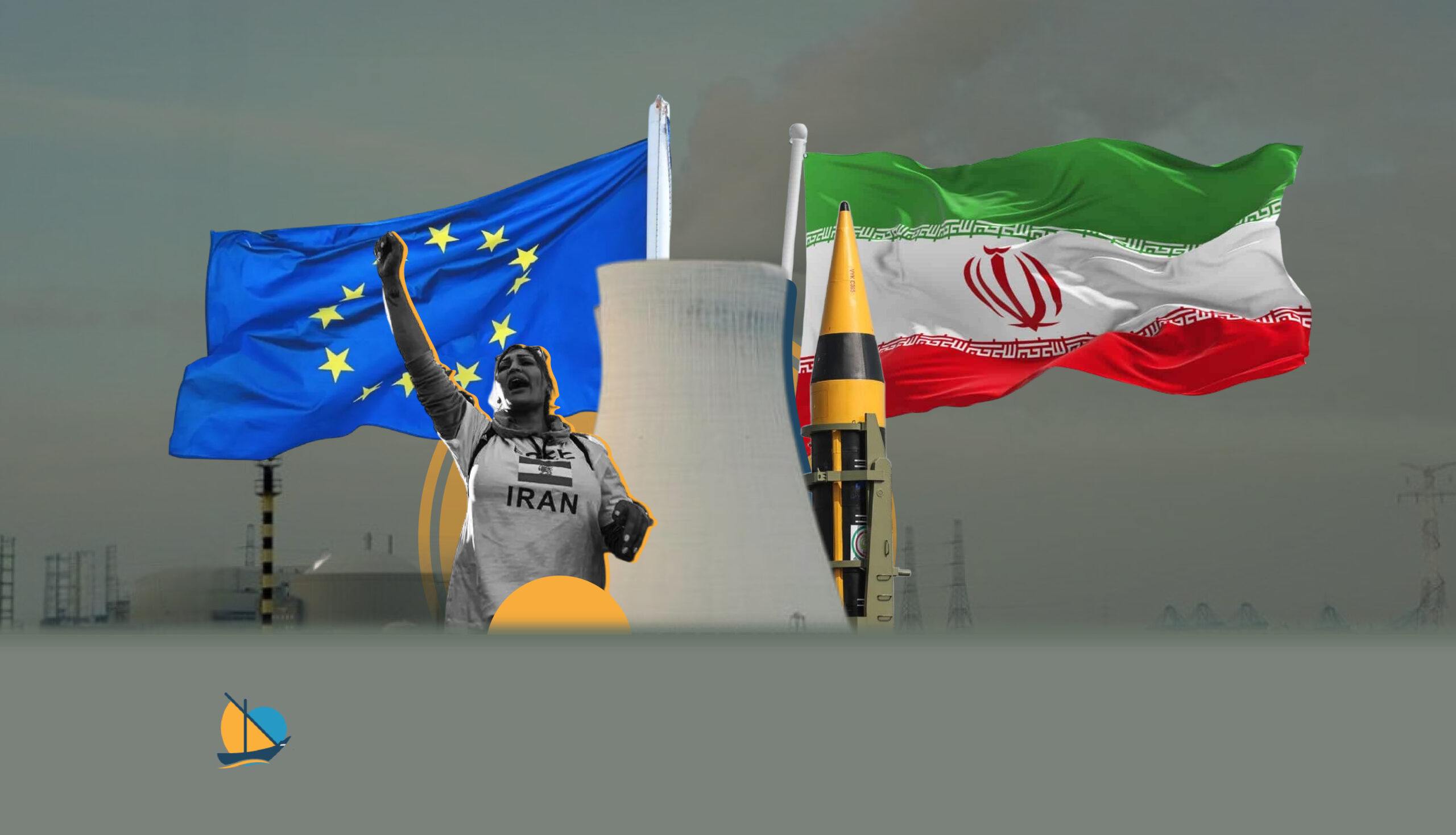
Iran today is going through a critical phase—perhaps the most challenging since the signing of the nuclear agreement in 2015—after European countries decided to activate the “snapback” mechanism within a time frame not exceeding one month if negotiations with Tehran fail. The snapback is the automatic reimposition of UN sanctions that had been lifted under the nuclear deal. This step is not a mere formality but has become a direct threat to the state’s economic and security capabilities, making the next thirty days a true test of the resilience of the Iranian state and its ability to maneuver both domestically and internationally.
The Nuclear Reality and Iran’s Options
Iran’s nuclear choices today are governed by a mix of internal and external pressures, leaving little room for maneuver without potentially catastrophic consequences. Iran responded to the Europeans’ decision to trigger the snapback mechanism with a parliamentary move to propose a law to withdraw from the Nuclear Non-Proliferation Treaty (NPT). However, withdrawing from the NPT without moving toward the production of a nuclear weapon would be a futile step that grants Iran no real deterrent capability. Instead, it would expose the country to suffocating international isolation and increase economic pressure. While this option may seem to some as a means of leverage or negotiation, in practice it provides Iran with no tangible benefit and leaves it vulnerable to sanctions without any strategic deterrent.
Conversely, pursuing the development of a nuclear weapon is not merely a political or technical challenge—it would directly lead to a far more intense military conflict than the recent war, with unpredictable security and economic consequences, including harsher sanctions, possible targeting of nuclear and military facilities, and potentially strategic shifts across the entire region. This path imposes a heavy domestic and external political cost on Iran, with the likelihood of a direct confrontation with the United States or Israel that would be even more intense than the recent war of June 2025.
At the same time, nuclear deterrence without a strong foundation of non-nuclear deterrence would be disastrous for Iran. Non-nuclear deterrence includes a robust economy, strong conventional weapons, a high defensive spirit, internal cohesion, extensive foreign relations, and strategic ties with Russia and China. In the absence of these elements, any step toward nuclearization becomes a ticking time bomb, with the risk of domestic upheaval, intensifying public protests, and weakening state authority in the face of regional and international powers.
The Iranian economy has suffered for years from accumulated structural imbalances, compounded by international sanctions and monetary policy crises. The activation of the snapback mechanism increases these pressures, confronting Iran with an extremely complex economic reality: high inflation, declining purchasing power, currency market instability, and limited government financial resources.
Even if negotiations continue without an agreement, the economy remains largely paralyzed, exacerbating social problems and increasing the likelihood of public protests, along with the risk of declining trust in government and deepening internal divisions.
Any attempt to achieve economic growth at this stage requires a tangible diplomatic breakthrough that would allow the release of frozen funds, the restoration of investor confidence, and the reopening of international financing channels—something difficult to achieve amid the current tensions.
Scenarios
The situation can be analyzed through three main scenarios:
First scenario: Potential breakthrough. This scenario would materialize if a nuclear agreement is reached with Europe or the United States, with the snapback mechanism not activated and a low risk of war. In this trajectory, frozen funds would be gradually released, the dollar exchange rate would stabilize at acceptable levels, the fiscal deficit would shrink, and investment and job opportunities in the energy sector would return. International financing mechanisms such as FATF and SWIFT could also be restored, with gradual economic growth of 2.5–3%.
This scenario offers a real opportunity for Iran to revive its economy but requires significant political concessions, including retreating from some regional policies or adjusting its nuclear program in line with international conditions. Although it is the safest scenario, its implementation is not guaranteed due to internal pressures and political opposition, making success a delicate matter requiring prudent and balanced management.
Second scenario: The worst economically and militarily. This would occur if no agreement is reached and the snapback mechanism is indeed activated. With the heightened risk of military attack, Iran would face maximum economic pressure: limited financial resources, soaring inflation, a rising dollar exchange rate, and higher prices for basic commodities. In this context, the country would be exposed to suffocating isolation and public protests, while the threat of direct military confrontation would persist, with rapid regional shifts possibly leading to larger regional conflicts.
This scenario represents the most dangerous outcome, placing Iran between the hammer of sanctions and the anvil of military confrontation, leaving it vulnerable to accelerated economic collapse and growing security and political risks both domestically and externally. In this environment, social and political stability in Iran cannot be assured, threatening the state’s ability to manage crises or maintain regional influence.
Third scenario: The gray zone. The gray zone involves continued negotiations without a real agreement and without activation of the snapback, amid ongoing military threats. Here, the economy remains paralyzed, sanctions widen, indirect military attacks persist, and new fronts open in the region.
This scenario represents long-term attrition, leading to gradual internal erosion, with direct effects on citizens’ confidence in the state, its ability to manage resources, and its capacity to confront challenges. Although there may be no direct confrontation, continuous attrition creates a fragile environment that makes Iran more vulnerable to economic and political crises in the near future.
Pulling the Trigger
Iran’s situation cannot be separated from the regional and international context. Its nuclear moves affect the balance of power in the Middle East, particularly vis-à-vis regional alliances led by the United States and Israel. Strategic relations with Russia and China may provide Iran with limited breathing space but cannot compensate for Western economic isolation or the threat of sanctions.
Any nuclear escalation or withdrawal from agreements would make Iran a direct target for international pressure, and possibly indirect military attacks, raising the likelihood of broader regional conflicts with serious economic and social repercussions at home.
Iran today stands at a critical crossroads. The safe path requires economic openness, internal cohesion, and strong strategic alliances. By contrast, a path toward nuclear weapons or international isolation may lead to compounded crises encompassing the economy, security, and domestic politics. The next thirty days are not merely a time frame but a real test of the Iranian state’s resilience and its ability to manage internal and external pressures.
Success in passing this stage requires the ability to balance internal pressures with international commitments, and nuclear ambitions with economic strategies. Failure, on the other hand, would leave Iran facing compounded crises that could devastate the economy, threaten stability, and place the country on an irreversible path toward greater isolation and conflict. At present, there is little indication of any Western diplomatic shift toward Iran.